
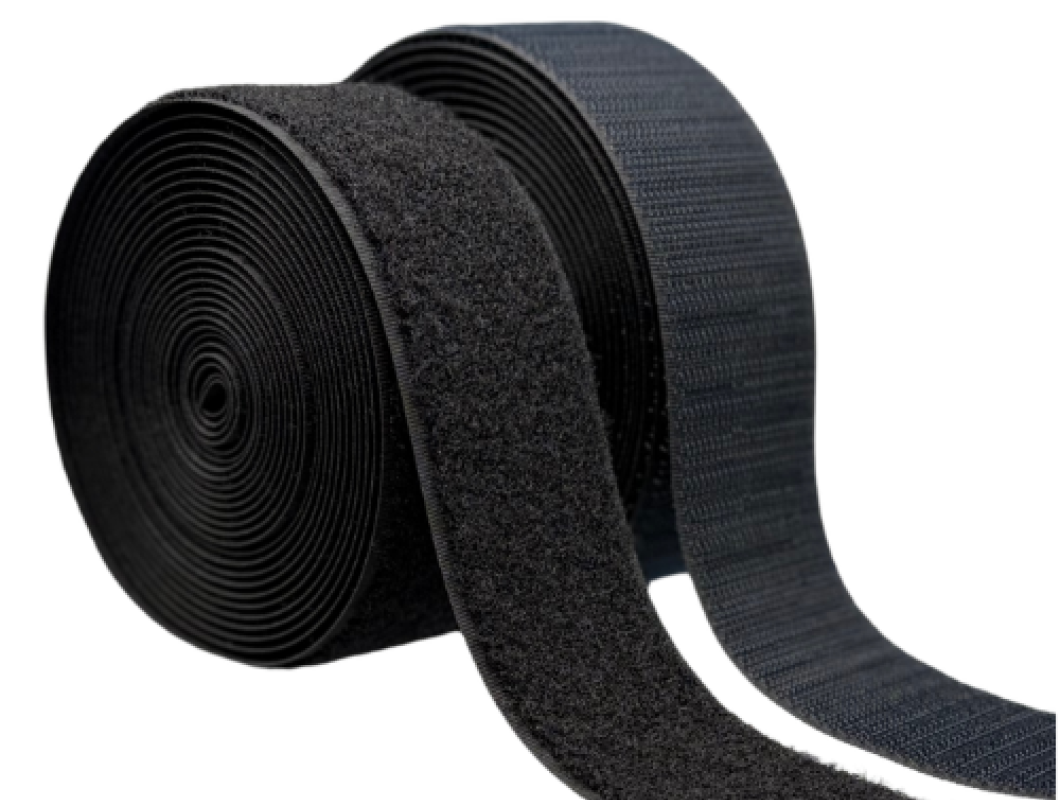
Sew-on hook
and loop, rubber-based hook and loop, and acrylic-based hook and loop all serve
the same basic purpose, but they are designed for very different environments
and performance needs. At WBC Industries, we offer these options as part of our
in-house WBC Brand material line, giving customers dependable fastening
solutions for a wide range of applications. Choosing the right type comes down
to how it will be used, what it will be exposed to, and how it will be applied
to a finished product.
Sew On Hook and Loop
Sew on hook
and loop is the most traditional and widely used option. It is designed
specifically to be stitched onto fabric, webbing, or soft goods.
Because it
has no pressure-sensitive adhesive backing, it remains flexible and easy to sew
through without clogging needles or creating stiffness along seams.
Common uses
include:
- Apparel and uniforms
- Medical braces and supports
- Bags, straps, and tactical gear
- Upholstery and fabric assemblies
- Pet products (collars, harnesses, etc.)
This option
is typically chosen when the fastening system needs to be permanent, washable,
and integrated directly into textiles.
Rubber-Based Hook and Loop
Rubber-based
hook and loop uses a synthetic rubber adhesive backing. It is a
pressure-sensitive adhesive designed for high initial tack and strong bond to a
wide variety of surfaces.
It performs
well on:
- Plastics
- Powder-coated metals
- Wood
- Many smooth or semi-porous surfaces
Rubber-based
adhesive is often preferred for indoor applications or situations where the
bond does not need to withstand extreme heat or long-term UV exposure.
Common uses
include:
- Point-of-purchase displays
- General industrial mounting
- Indoor signage
- Lightweight assembly or component
attachment
It is known
for a strong “instant grab,” making installation fast and simple.
Acrylic-Based Hook and Loop
Acrylic-based
hook and loop uses an acrylic adhesive system, which is generally more durable
and environmentally resistant than rubber-based adhesive. It is designed for
long-term bonding and performs better under challenging conditions such as
heat, UV exposure, and moisture. However, acrylic adhesive systems are
typically more limited in availability and customization.
Key uses
include:
- Outdoor applications
- Automotive interiors and
exterior-adjacent components
- Long-term industrial installations
- Environments with temperature
fluctuations or humidity exposure
One
limitation is that acrylic-based hook and loop is generally only available in
standard black and white options, which can restrict aesthetic matching or
color-coding needs.
Choosing the Right Option
- Choose sew on hook and loop when
you are integrating fasteners into fabric or sewn goods.
- Choose rubber-based hook and loop
when you need strong, quick adhesion for indoor or general-purpose mounting.
- Choose acrylic-based hook and loop
when durability, heat resistance, and long-term performance are the
priority.
Product Availability
WBC
Industries, Inc. offers a wide range of sew on hook and loop and rubber-based
hook and loop in multiple widths and colors, making it easier to match
application requirements, branding needs, or production specifications.
Acrylic-based hook and loop, by contrast, is more limited in color availability,
typically restricted to black and white.
Each adhesive
system serves a distinct role, and selecting the right one ensures better
performance, longer lifespan, and a more reliable finished product.